Wednesday, 14 December 2016

In the news: Tech billionaires unite to battle climate change

It seems that private wealth is forging its own path to a zero-emission future independent of state incentives, thanks to the development of Breakthrough Energy Ventures (BEV) led by Bill Gates.


The i published the article today (14/12/16) summarised the plan of the 23 investors involved, including Richard Branson (Virgin) and Jeff Bezos (Amazon), both of which are already involved in projects promoting technological sustainability. Branson launched the Virgin Earth Challenge competition in 2007 to stimulate development of carbon removal technologies, whilst Bezos founded Blue Origin, paving the way for reusable spaceflight technology alongside Elon Musk's SpaceX.

The plan is to invest more than $1 billion dollars into five branches of research, including electricity, transportation, agriculture, manufacturing and buildings. Ultimately, the aim of BEV is to improve methods of producing, transmitting and storing low-carbon electricity, develop effective carbon-free modes of transportation and grow enough food sustainably for a rapidly growing population.

Perhaps I was wrong to think that state investment was the only way to initiate real progress towards net-zero emissions. Could it be that capitalism is the solution as well as the problem? There is no doubt that climate change is uncovering new realms of economic profitability. With increasing public interest in climate issues and consumer demand for technology, it seems the trendy world of tech is listening and ready to deliver...

Wednesday, 7 December 2016

In the news: Tesla And SolarCity Power Entire Island With Solar Energy Microgrid


I came across this brilliant video from Tesla and SolarCity this week. Elon Musk really does put his money where his mouth is.

They have proved their capacity for widespread deployment of solar energy by using the American Samoan island of Ta'u as a case study. In the past, Ta'u was dependent on diesel generators for power. However, 5328 solar panels have been built alongside 6 megawatt hours of storage from 60 Tesla powerpacks. Now, the whole island can remain powered for 3 full days without sun.

This is significant. For a long time, the barrier to progress of harnessing solar energy was not only cost of production and implementation, but the ability to effectively store the energy for future use. This means that solar energy is also a viable option as part of the energy mix for those with limited sunlight hours.

Next up on the blog: an insight into these two merger companies from Elon Musk and their capacity for paving the way towards a fossil-free future.

Money: the barrier to a CCS future

The need for urgent CCS investment has been established in order to meet the ambitious Paris Agreement targets. How far away are we from CCS becoming a common reality?

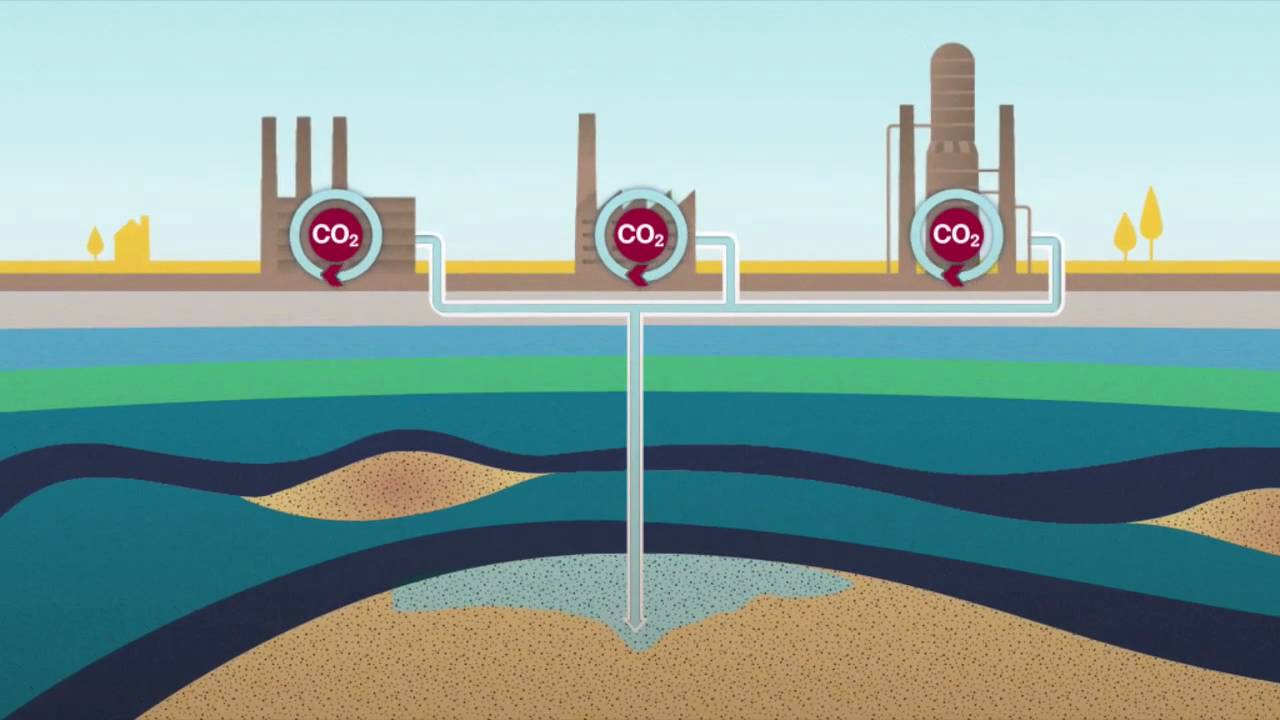
Each of the individual components of capture, transport and storage have been in operation already. For example, capture and removal of carbon dioxide from natural gas is already a common process in this industry (Rufford et al., 2012) through use of amines. Furthermore, transport and storage of carbon dioxide is already in use in the enhanced oil recovery industry, amongst others (IEA, 2010). The challenge is integrating each of these components on an industrial scale.

CCS has already been in operation in several countries, including Germany, Canada and the US. The first commercial example was the Weyburn-Midale Carbon Dioxide Project in Saskatchewan, Canada, which began construction in 2000. It began as a collaborative project between researchers to test the feasibility of the technology. As of 2008, it became the largest CCS plant in the world (IEA, 2010). Researchers found that after allegations of carbon dioxide leakage in 2011, it was determined that the detection was from naturally occurring biological processes instead (Green Car Congress press release, 2005; NRDC, 2012). So far, its implementation has been deemed successful, and it has been calculated that Weyburn-Midale will store carbon dioxide equivalent to removing about 9 million cars off the road for a year (PTRC, 2010).

Meanwhile, in Europe, the Schwarze Pumpe power station in eastern Germany (run by Swedish energy company Vattenfall) stopped its CCS project in 2014 because of significant costs of running the technology (thelocal.se, 2014).

On UK shores, two key CCS proposals that were in the pipeline to be built alongside current power stations (Peterhead and Drax) were halted when the government scrapped the funding for a CCS competition worth £1 billion in November 2015 (The Guardian, 2015). The integration of CCS into current power plant infrastructure is an expensive process, raised by the report published by the Climate Change Committee from the last post (CCC, 2016). The scrapping of this scheme has therefore significantly halted any progress of CCS being developed in the UK. This needs to change.

Costs of CCS vary depending on the site. For example, costs drastically increase if the distance of the CCS plant to the point source increases, or if there is a reduction in concentration or volume of carbon dioxide (IEA, 2013). It is the uncertainty of costs that is ultimately hindering development. How could the issue of cost be resolved to spark global implementation?

The International Energy Agency (2013) published a report recommending that governments commit public funds towards ten pilot schemes to help determine true physical and economic feasibility of different projects, including iron, steel and cement plants. To encourage government uptake, they further recommend the allocation of capital grants, subsidies and loans at the initial stages of development (see figure below), which then shifts to carbon taxation and credits in the latter stages once deployed on the wider-scale:


Possible gateways on the way to wide-scale deployment in a CCS policy framework (Source: IEA, 2012) 

The technology exists. It is physically feasible. Money, once more, remains the barrier to progress.

Monday, 28 November 2016

Guidance from the Committee on Climate Change: An urgent need for CDR investment

Last month, the Committee on Climate Change (CCC), official advisors to UK government, published a document called "UK climate action following the Paris Agreement" (CCC, 2016), summarised in the Guardian. It was significant because it acknowledged the need to invest in carbon dioxide removal (CDR) technologies with immediate effect.

The CCC claim that the UK will not reach the goal of net-zero emissions by 2100 at the latest due to reliance on aviation, agriculture and industry, all of which are emissions intensive. A target is already in place to reduce emissions by 80% from 1990 levels by 2050 as part of the Climate Change Act (2008) in domestic law, however, to account for the projected remaining percentage, CDR technology must compensate for remaining emissions (CCC, 2016). Is it really the only feasible way?

When studying and teaching energy policy, I have always taught and been taught not to put all of your eggs in one basket. Energy markets are volatile and require diversity in application to increase energy security. Whilst the CCC recommend that the UK should "vigorously pursue the measures required to deliver" the Agreement, there is little consideration of these other options. The decarbonisation of electricity and market incentives for zero-emissions vehicles and heating are mentioned, but recommendations are limited. For example, the key recommendation to increase the use of zero-emissions vehicles is to develop greater infrastructure to support them. I believe the CCC is missing the point of the problem here, which is that they remain unaffordable. State subsidies for development and production are also urgently needed. 

I refer back to the example of China from my previous post: generous incentives have led to such a rapid increase in solar manufacturing that in 2014, China’s total installed capacity was 71% of total global operations (Mauthner, Weiss and Spörk-Dür, 2016). Cue increased output and reduced prices, increasing global feasibility of applying the technology. The reintroduction of the subsidies that were scrapped in the UK in early 2016 (Department of Energy and Climate Change, 2015) would help to boost production and reduce costs of any technologies that we need to develop urgently to meet the net-zero target.

The CDR technologies proposed for investment are carbon capture storage (CCS) and air capture and storage (CCC, 2016). CDR is regarded as necessary because CO2 absorbs long-wave radiation that would have been reflected back into space, which is then reemitted as heat. Removal of CO2 will therefore reduce the amount of long-wave absorption, limiting temperature increase. CDR must be deployed on a scale to match the energy system releasing CO2 into the atmosphere (Caldeira et al., 2013), showing that it requires global participation to be successful. Is it the main answer to the UK's problems?

Carbon Capture and Storage (CCS)


CCS is in the early stages of development, but the IPCC (2005) believe that it has great potential. CCS plants are normally attached to point sources of emissions (e.g. a power plant) to capture emissions more effectively. It could reduce emissions of a typical power plant by 80 to 90%. However, feasibility is uncertain because no commercial projects currently exist. Furthermore, long-term storage security in geological formations is unknown. There is risk of CO2 leaking and widespread impacts could alter oceanic pH (Phelps et al., 2015). Although, acidification rates would be slower than under unmitigated CO2 emissions, indicating that CCS is investment-worthy.

If 3% of terrestrial space on earth was assigned to CCS projects, 1 GtCO2e/yr could be removed (Caldeira et al., 2013). The Paris Agreement states that annual emissions must reduce to 40 GtCO2e to meet the two-degree limit (CCC, 2016). This shows that CCS is limited for effective sequestration alone and must be implemented alongside other solutions. CCS could be easily assigned to power plants in the UK, and the UK currently has a policy in place to ensure that all new coal-fired power stations are built with CCS some part of the infrastructure (CCSA, 2016).

Direct air capture and storage

Artist's impression (Cornerstone, 2015)


Similarly, air capture and storage is also in need of development as the feasibility is uncertain. It is a similar approach to CCS, except it is independent of any current energy infrastructure. This means that it is likely to be less expensive than CCS (Caldeira et al., 2013). Progressive research has already taken place, such as the idea of using carbon-absorbing materials like porous metal-organic frameworks (Ma and Zhou, 2010), or injecting CO2 into basalt underground that forms solid rock within two years (McGrail et al., 2016). If this study proves repeatable, the risk of CO2 leakage would be significantly reduced and would help to balance the carbon cycle with greater terrestrial uptake.

The alternatives:


Renewables, of course! The UK is rife with potential for wind, solar and tidal power to name a few. Nuclear power (whatever your stance) is remaining part of our energy policy with the announcement of the construction of Hinckley Point C in September 2016. Bring back those state subsidies!

And what of solar radiation management as an alternative? It is clear from my investigation into space-based schemes last week that it will not solve the root problem of continued CO2 emissions. It is too expensive an approach to buy us time for figuring out an effective CDR solution in such a small time frame. Of all SRM techniques, aerosols may well serve as the most time and cost-effective approach (Caldeira et al., 2013), but we'll find out more about those later...

Overall, the CCC are correct that CDR methods need urgent investment and deployment, but focus should not be shifted to CDR alone. It definitely shouldn't be used as means to justify inadequate emissions reductions. Investments in renewables and energy efficiency are also imperative.

Wednesday, 16 November 2016

Pie in the sky


I've been looking forward to sinking my teeth into this post for a while - there are some weird and wonderful ideas out there.


Space-based methods of SRM are no doubt the most expensive options of geoengineering available. They're also highly risky. I have discussed in a previous post the risk of catastrophic failure causing rapid and catastrophic change in climate variables (Caldeira et al., 2013). Furthermore, once deployed, there's no going back. Once a space-based scheme has been deployed in orbit, there it will remain. At least until we work out how to safely remove it. Physicists and engineers are yet to discover how to remove 'space debris', which consists of defunct man-made objects that are no longer in operation but remain in orbit. The European Space Agency's e.Deorbit project is waiting for approval next month to be deployed in 2021 to remove a defunct ESA satellite. This would be a huge step in the 'Clean Space' initiative.

But what if it could buy us time whilst we work out how to swiftly reduce emissions, despite being risky and prohibitively expensive? Experiments are clearly limited in their capacity to determine outcomes, so we depend on the use of models (Sanchez and McInnes, 2015). Matthews and Caldeira (2007) state that modelling results show that cooling could begin within months of the implementation of orbital schemes, which would result in a cooling of several Kelvin within ten years. Therefore these approaches could be capable of preventing the collapse of climate-stabilising ice sheets, such as Greenland (Irvine et al., 2009).


Sunshades and solar mirrors:


(Source: Häggström) 


Early (1989) was the first to introduce the idea of orbital methods of climate management. He proposed using a Fresnel lens at the first Lagrange point of the Earth-Sun system - where the gravitational pull from the earth and sun are balanced to produce the centripetal force required for orbit. It would diffract sunlight and reduce the amount of radiation reaching earth. It has since been calculated that a diffraction grating need not be bigger than 1000 kilometres long to disperse the appropriate amount of light - the image above is gross overestimate of the size needed. These methods were since explored by the National Academy of Science (1992) and Angel (2006), who proposed placing a sunshade made up of multiple 'flyers' in orbit at the first Lagrange point.


Artificial planetary rings:


Earth ring concept, with shepherding satellites (Pearson et al., 2006) 


Alternatively, we could create artificial rings of particles to reflect and diffract light (Pearson et al., 2006) that would resemble something like Saturn's rings. Somewhat an eccentric idea, Struck (2007) recommended that we use particles of lunar dust in the moon's orbit. He argued that they would be the right size to scatter sunlight and the right colour of higher albedo to reflect radiation for about 20 hours a month.


... Is it feasible?


To quote Angel and Warden (2006):

"To make ten billion units of 14-meter squares in 30 years (10,000 days) would require manufacture and placement of a million units a day at L1. If there were 1,000 factories working in parallel, each factory would have to complete a unit in little more than a minute."


So, no. Not likely. We could always wait for the development of robotics, but this could take decades (McInnes, 2010).

What about the cost? Understandably, space mirrors and the like involve significant investment from design, to development, to implementation. It could cost up to $200 trillion dollars for the particle solar rings approach and $500 billion for deploying the spacecraft to implement it (Britt, 2005). Furthermore, It is unlikely that space-based schemes will take off (ha) without market incentives. This is why the development and implementation of space-based schemes remains a pipedream. The initial idea of a thin Fresnel lens was proposed almost 30 years ago, yet there has been little headway towards its realisation. Think of the booming industry of solar power in China: thanks to generous state incentives, solar manufacturing has risen at an annual rate of 2.4% between 2010 and 2015. Increased output has reduced prices significantly, making solar energy an increasing feasible option. If we can't convince the state, then companies will lack the ambition to pursue space-based projects.

Politically, more issues arise. The definition of "dangerous anthropogenic interference" by the UN Framework Convention on Climate Change (UNFCCC) is any activity that produces inadvertent climate effects (Robock, 2008). Space-based schemes of geoengineering are likely to fall into this category and therefore are unlikely to be investigated. There is also the issue of conlficting with current treaties. The Environmental Modification Convention (ENMOD) prohibits “military or any other hostile use of environmental modification techniques having widespread, long-lasting or severe effects as the means of destruction, damage, or injury to any other State Party.” Therefore, any space-based scheme that has adverse impacts on regional climate would therefore violate the treaty (Robock, 2008).

However, let's consider the end goal: who and what are we trying to save? Would space-based schemes help protect human existence and the services we depend on? There are unknown impacts on vegetation growth and health. If the model results are true (Caldeira and Wood, 2008), then space-based schemes would likely reduce precipitation amount as well as sunlight (Bala, 2011), reducing primary productivity. Robock (2008) reminds us that reduction in solar radiation will not reduce the rates of ocean acidification from continued carbon emissions. This has implications for the entire oceanic biological chain, which in turn will impact us. Human health and prosperity thrives on healthy biological services. Thus, biological health should come first if we aim to protect human civilisation. And this ultimately leads us to carbon dioxide removal methods as the solution.

Space-based schemes would also threaten to undo all of the good work we have put in so far. It would reduce the potential for solar power and likely undermine the progress we have made in emissions mitigation through the likes of carbon taxation.

As someone with significant interest in climate dynamics and feedbacks, and without consideration of consequences, I wouldn't hesitate to be part of the experience of a worldwide experiment in orbital geoengineering. Think of what it could do for our scientific understanding of the field. But, rightly so, we live in a civilised world of economic and social rules, regulations and restrictions. The human desire for safety and stability will overrule any scientific ambition that could threaten that steady state.

Wednesday, 9 November 2016

Trump as president elect: a climate of uncertainty

Published by The i on Friday 4th November:


There's a quote from Dr Phillip Williamson (of the University of East Anglia) within the article that resonates with me: 

"There's an implicit assumption in the Paris Agreement that greenhouse gases will need to be physically removed from the atmosphere. In other words, world leaders have agreed to do climate geo-engineering, although they haven't realised that".

As the Paris Agreement unfolds, it is becoming increasingly difficult to see how it is possibly going to deliver. With such low public support for the deployment of geoengineering (Scheer and Renn, 2014) and politicians seemly unaware of the political and ethical controversies that will be unearthed, will state governments end up turning their backs on the agreement? After all, global law is no law at all if there is no higher legal power to enforce it (Frydman, 2012).

And after the news of Trump's election today... what on earth will that mean for the agreement? He allegedly vowed to end all federal spending on renewable technology development if elected. Relying on the private sector development of these technologies is problematic because an electricity market that offers only short-term prices (Energy UK, 2014) does not drive incentive for building new, renewable technologies. Public policies must provide motives to drive private sector development of these technologies. The USA is a huge global player in climate, which makes Trump a huge threat.

Things aren't looking too rosy.

SRM 101

Solar Radiation Management (SRM). Perhaps the more controversial of the two strands of geoengineering. If you conduct a Google search then results are dominated with articles outlining the risks and impracticalities. Let's look at the fundamentals:

What?


The aim of SRM is to reduce the amount of solar intensity reaching earth's surface by reflecting it back to space. Six key methods are summarised as follows:

(From Caldeira et al., 2013, adapted from the Royal Society, 2009)


Where?


The methods range from being implemented on earth's surface (plant reflectivity, whitening of the ocean), to the earth's atmosphere (stratospheric aerosols, whitening of clouds), even as far as low earth orbit (space-based schemes).


How?


Widespread implementation of SRM methods would need international cooperation and agreement because of their impacts of a global nature. For example, numerical models have found that any local or regional implementation of methods would likely have global impacts (Caldeira and Wood, 2008). This raises questions regarding the governance of SRM, as all nations must ratify its implementation. A totalitarian approach, rather than a democratic one, lends itself better to global scale application (Stilgoe, 2015) but ethics will likely always stand in the way of this becoming reality.


Why?


With uncertainty surrounding the climate's tipping point, and the decadal to centennial timescales it would take for CDR methods to come into effect, SRM is seen as the only option for immediate action for some. Whilst it doesn't have the capacity to reduce greenhouse gas concentrations in the atmosphere, it is able to reduce the effects of them. For those who believe that it is too late, SRM as seen as the only feasible option left.


Why not?


As above, a reduction in solar radiation will not solve the root of the problem - the increase of greenhouse gas concentration in the atmosphere. Despite the reflection of sunlight away from earth, it will likely not be possible to restore all climatic fields, temperature and precipitation, for example (Caldeira et al., 2013). There is also great uncertainty in the impacts of these methods. Models cannot possibly predict the true extent of global impacts, let alone regional ones (see the 'environmental risk' ratings in the Royal Society's table above). Reduced warming from SRM methods would reduce the global mean of precipitation (Bala et al., 2008; Caldeira and Wood, 2008; Lunt et al., 2008), shifting the hydrological cycle and likely increasing drought frequency in many regions.

To top it off, failure of these methods would mean catastrophic impacts. Earth would experience a significant, short-term climate forcing that would mean warming at rates that ecological systems could not cope with and further mass carbon dioxide release (Matthews and Caldeira, 2007), leaving earth systems worse off than present.

I don't know what to think. Never underestimate the capacity of internal systems (i.e. CDR) to moderate carbon flux between sources and sinks, but this is a slow process that just cannot keep up with the demands of a two-degree warming limit agreed at COP21 in Paris. A human civilisation built on reactionary principles means that we create unfeasible reactionary targets, and these targets demand the implementation of reactionary solutions... enter SRM. I don't want to it to be the solution, but I fear that compulsive human nature has dug us a hole that leaves us no other choice.

Agree or disagree:
Two-degree warming limit is an unfeasible benchmark?
Two-degree warming limit is meaningless?
SRM is the only feasible solution left?
High risk, high reward, or not?
Am I a pessimist?